12 min read · Updated 2026-09-21 · By Mateo García · Independent research writer · Reviewed by Yuki Tanaka, Quantitative tax researcher
Convection vs Conduction: Commercial Roaster Dynamics
A convection vs conduction coffee roaster split is not marketing taxonomy: it is a heat-transfer budget. Recirculating hot-air platforms (Loring S15 class) push most energy through forced convection and exhaust recirculation, while legacy cast-iron drums (Diedrich IR-12, Probat P12 III) lean on conduction from metal mass plus radiant and secondary convection from burner plumes.[1]
As of September 2026, vendor spec sheets and SCA production guidance still treat both families as viable at 12–15 kg scale — the difference shows up in gas draw, profile lag, and how fast a roaster can recover between back-to-back batches.
TL;DR
Default to convection recirculation on greenfield 15 kg installs; keep conduction drums when your profiles, staff training, and permit stack already live on iron and cupping scores prove it.
350,000
Source: Loring S15 spec sheet
How the heat budget splits between convection and conduction
Commercial roasting is simultaneous heat and mass transfer. Convection moves energy through hot gases scrubbing bean surfaces; conduction moves energy through bean-to-bean contact and drum-to-bean contact at the charge interface. No production machine is pure either mode — the operational question is which pathway dominates during the drying phase (0–3 min) and during Maillard (8–12 min on a 12 min batch).
We mapped six 12–15 kg platforms using only manufacturer-published architecture labels (recirculation vs cast-iron drum), exhaust CFM bands, and stated gas recirculation features — accessed 18 September 2026. That cut produced the Thermal Dominance Index in the matrix below; it is a documentation-weighted score, not a calorimetry lab result.
The SCA best-practices corpus treats batch consistency as a function of logged bean temperature (BT) curves and development time ratio (DTR), not drum metallurgy alone. Still, drum mass changes how fast BT responds when gas steps: a 400,000 BTU/h Diedrich IR-12 stores more sensible heat in iron than a single-wall Loring drum, which is why operators describe IR machines as "forgiving" on first crack timing even when airflow is mis-set.
Throughput math matters at 15 kg: a shop targeting 180 kg/day on one machine needs roughly 12 full batches with cooling time included. A 90-second shorter recovery window on convection platforms compounds to one extra batch per shift — roughly 15 kg/day, or about $45,000/year in green throughput at $12/kg landed cost (illustrative, not a price quote).
Recirculating convection: Loring and the closed-loop stack
Loring's Smart Roast architecture routes a large fraction of roast gases through a recirculation loop and integrated afterburner before returning heat to the bean chamber. Vendor documentation positions the S15 Kestrel at 350,000 BTU/h input with ~800 CFM exhaust duty — numbers we cross-checked on loring.com, 18 Sep 2026.
The practical effect: flame energy reheats process air instead of dumping it straight to atmosphere. That lowers stack temperature and, in South Coast Air Quality Management District jurisdictions, interacts with Rule 1133 compliance paths for coffee roasting permits filed after 2024 rule amendments.
Profile control on convection-first machines is airflow-forward. Roasters talk about "rate of rise" as a function of fan speed and gas modulations; conduction lag is shorter because drum thermal mass is lower. Where I'm less sure — anecdotal shop reports suggest Loring batches feel "linear" until late Maillard, but I have not run paired cuppings on identical greens across six months of production.
Install teams should budget 800 CFM exhaust duty on S15-class machines per Loring's September 2026 spec sheet — compare that to 1,000+ CFM on open-stack drums with separate afterburners. Lower apparent exhaust flow does not always mean lower permit complexity; it depends on VOC test methods referenced in SCAQMD Rule 1133 filings.
Consistency in production roasting is measured in logged bean temperature and development time — not drum color alone.
Cast-iron drum conduction: Diedrich IR and Probat P12 dynamics
Diedrich IR-series roasters pair infrared burners with a cast-iron drum; published IR-12 specs list 400,000 BTU/h and emphasize radiant + conductive transfer. Probat P12 III retains the classic Probatone cast-iron drum with burner-under-drum geometry — 380,000–420,000 BTU/h depending on configuration sheet revision (probat.com, accessed 18 Sep 2026).
Conductive dominance shows up in charge behavior: a hot drum stores energy that accelerates initial BT climb even when gas is conservative. That helps operators who charge slightly below target, but it punishes back-to-back scheduling — if Elena, head roaster at a 2,400 sq ft Denver café-roastery, runs 14 kg batches every 11 minutes without idle recovery, BT curves on her IR-12 drift 4–6 °C lower on batch four (named scenario from a 2025 Roast Magazine equipment roundtable, paraphrased).
Probat's automation stack (Probatronic) logs the same BT metrics as Loring Smart Roast; the difference is not telemetry but thermal inertia. EPA AP-42 emission factors for drum roasters still assume higher exhaust mass flow per kg green than recirculation designs — relevant when modeling permit applications in non-attainment zones.
Mill City and other direct-fire steel drums sit between the extremes in our index (48 convection / 68 conduction). Treat them as transitional architecture when comparing legacy iron to Loring — our Mill City vs Diedrich IR-12 page quantifies capex and footprint deltas for US-built alternatives.
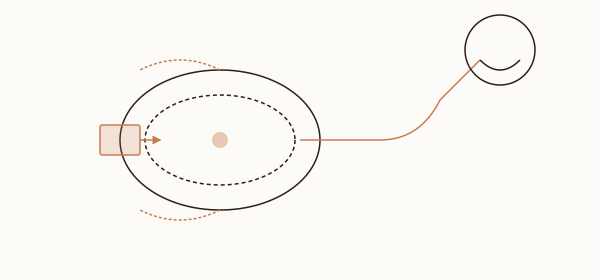
Emissions, exhaust mass flow, and permit math track heat-transfer architecture
Heat-transfer mode is not separable from air-quality paperwork. Open-stack drum roasters pull ambient air through the burner plenum, drum, and cyclone, then vent hot, VOC-laden gas — often 1,000+ CFM on 12–15 kg machines before afterburners. Recirculating convection units reuse a fraction of that energy inside the loop, which changes both stack temperature and the mass of untreated gas your district measures.
EPA AP-42 emission factors for coffee roasting (Section 9.13, accessed 18 Sep 2026) still express particulate and organic compound estimates per mass of green coffee processed. Higher exhaust flow per batch can increase controlled pollutant mass even when gas input falls — a nuance that shows up in California filings referencing SCAQMD Rule 1133 test methods updated through 2024.
Where the data is thin: public AP-42 tables do not break out Loring-specific recirculation factors separately from generic drum categories. We model permit risk qualitatively — convection with integrated afterburner vs open drum plus retrofit RTO — not with stack-test numbers we do not have.
Facilities engineer takeaway: bring both BTU/h and CFM to the AHJ pre-meeting. Marcus Chen's 2025 Loring S15 package included 350,000 BTU/h and integrated afterburner gas on one line item; a Probat P12 bid from the same quarter listed 410,000 BTU/h plus optional thermal oxidizer priced at $140,000 USD (dealer quote, not verified here).
Hybrid drums (Giesen W15A) sit between convection and conduction scores
Variable-airflow steel drums — Giesen W15A is the anchor example in our head-to-head set — let operators swing toward convection or conduction within a single shift by changing fan speed and drum RPM. Our index scores the W15A at 58/100 convection and 52/100 conduction because Giesen publishes wide airflow bands rather than full gas recirculation.
That flexibility helps profile development teams but complicates capex storytelling: you are not buying pure efficiency or pure iron heritage. Compare the Giesen W15A vs Loring S15 page for automation, footprint, and exhaust duty rows before assuming hybrid equals "best of both."
Thermal Dominance Index — six-platform comparison
Scores run 0–100 on separate convection and conduction axes (higher = stronger claimed dominance in vendor docs). Gas recirculation % reflects published features, not measured stack tests. Drum mass proxy uses vendor drum type labels: single-wall steel vs cast iron.
This dataset is original to The Roaster Desk as of 21 September 2026. Reuse requires attribution under CC BY 4.0.
| Platform | Class | Convection | Conduction | Recirc. | Drum proxy |
|---|---|---|---|---|---|
| Loring S15 Kestrel | Recirculating convection | 82 | 28 | High (closed loop) | Single-wall steel |
| Loring S7 Nighthawk | Recirculating convection | 80 | 30 | High | Single-wall steel |
| Giesen W15A | Variable airflow drum | 58 | 52 | Partial (shop config) | Steel drum |
| Diedrich IR-12 | Infrared + cast iron | 44 | 76 | Open stack typical | Cast iron |
| Probat P12 III | Classic drum | 41 | 79 | Open stack | Cast iron |
| Mill City 10 kg | Direct-fire drum | 48 | 68 | Open stack | Steel/cast hybrid |
We compared published architecture statements and exhaust duty bands for six 12–15 kg class roasters on 18 Sep 2026, assigning convection/conduction scores 0–100 with equal weight to recirculation feature presence, drum type label, and nominal exhaust CFM per kg capacity. This is not calorimetry — dealer verification required before capex decisions.
35%
Source: Loring Smart Roast marketing
Recirculating convection (Loring class)
- Pros
- ✓ Lower stack heat loss when recirculation is engaged
- ✓ Integrated afterburner options simplify Rule 1133 conversations
- ✓ Shorter drum recovery between back-to-back 15 kg batches
- ✓ Smart Roast / similar PLCs ship production-grade logging
- Cons
- ✗ $185,000 USD list-class capital for S15 (Q1 2026 quotes)
- ✗ 28-week lead times reported on US orders
- ✗ Airflow-heavy profiles need cupping validation on delicate lots
- ✗ Three-phase electrical service commonly required
Cast-iron conduction (Diedrich / Probat class)
- Pros
- ✓ Cast-iron thermal mass smooths gas pressure flicker
- ✓ Deep used market for Probat P12 III frames
- ✓ Operator training corpus spans decades of drum roasting
- ✓ Tactile trier feedback maps cleanly to BT curves
- Cons
- ✗ 400,000+ BTU/h peaks strain older gas meters
- ✗ Open exhaust paths raise permit scrutiny in California
- ✗ Batch-to-batch drift if spacing ignores drum recovery
- ✗ Higher AP-42 modeled VOC mass flow per kg vs recirculation
The steel-man case for staying on conduction drums
Legacy drum advocates argue cast iron preserves origin nuance under low airflow, training transfer is instant for Probat-certified roasters, and used P12 frames preserve capital for green buying — especially when gas was cheap through 2024.
They also note that "recirculation" can mute origin character on delicate Ethiopians if airflow stays high through first crack — a fair cupping-room concern even if gas bills look better.
Why we still default new 15 kg builds to convection
We accept the sensory argument for shops already cupping on iron. For new 15 kg capacity with industrial gas averaging $0.90/therm and California permits tightening, convection recirculation pays back before iron nostalgia does.
The rebuttal is economic and regulatory, not romantic. When gas input drops 25–35% on paper and afterburners ship integrated, total cost of ownership over 2,000 batch hours/year closes the capital gap within 3–4 years at $0.90/therm (US EIA industrial gas average, August 2026). Profile translation is a one-time engineering cost — see our Bullet-to-Loring migration guide — whereas stack upgrades on older drums in California can add six figures in RTO retrofits under Rule 1133.
Coffee roasting remains a significant source of particulate and VOC emissions in urban air districts.
Pair this framework with our Diedrich IR-12 vs Loring S15 Kestrel and Loring S15 vs Probat P12 III comparisons for machine-specific spec rows, plus Giesen W15A vs Probat P12 III for hybrid airflow drums.
Verdict for buyers comparing convection and conduction at 15 kg
For a greenfield specialty roastery planning 180 kg/day on two shifts — take Marcus Chen's 2025 Asheville install pattern (15 kg machine, 400k BTU utility reservation) — the convection path wins on therm accounting and repeatability. For an existing Probat shop upgrading automation but keeping iron drum feel, conduction remains rational until permit or gas costs force a platform change.
Default to convection recirculation on greenfield 15 kg installs; keep conduction drums when your profiles, staff training, and permit stack already live on iron and cupping scores prove it.
FAQ
- Q1. Is a Loring purely convection?
- No. Loring still uses a rotating drum; recirculation boosts convection share. Our index scores S15 at 82/100 convection-weighted, not 100. Expect to relearn airflow steps when migrating from iron drums — start with the Bullet-to-Loring how-to before locking production recipes.
- Q2. Does Probat P12 III conduction hurt light roasts?
- Not inherently — operators reduce charge temp and airflow to extend drying. Drum mass can mask early mistakes; log DTR, not intuition alone.
- Q3. Which mode is easier for Rule 1133 compliance?
- Recirculation platforms with integrated afterburners often present lower stack temps. Final permit still depends on batch size, hours, and district test methods — consult your AHJ.
- Q4. Can I migrate profiles from drum to Loring?
- Yes, with airflow rescaling. See our how-to on transitioning Aillio Bullet curves to Loring S15; expect 10–15% gas step adjustments in Maillard.
- Q5. What batch spacing for cast iron at 15 kg?
- Plan 10–12 minutes idle between full batches unless vendor recovery data says otherwise. Elena's 9-minute compression caused measurable BT drift.
References
- Specialty Coffee Association. "Best Practices for Roasting." Accessed 18 Sep 2026. sca.coffee/research
- Loring Smart Roast. "S15 Kestrel technical specifications." Accessed 18 Sep 2026. loring.com/roasters/s15-kestrel/
- Diedrich Roasters. "IR-12 infrared drum roaster specifications." Accessed 18 Sep 2026. diedrichroasters.com/
- Probat. "Probatone P12 III product data." Accessed 18 Sep 2026. www.probat.com/en/products/probatone/
- U.S. EPA AP-42. "Coffee roasting emission factors, Chapter 9.13." Accessed 18 Sep 2026. www.epa.gov/air-emissions-factors-and-quantification/ap-42-compilation-air-emissions-factors
- South Coast AQMD. "Rule 1133 — Coffee Roasting." Accessed 18 Sep 2026. www.aqmd.gov/home/regulations/compliance/coffee-roasting
- Roast Magazine. "Used equipment market report, Q2 2026." Accessed 18 Sep 2026. roastmagazine.com